
Dental Implants vs Mini Implants: Which Is Right for You?
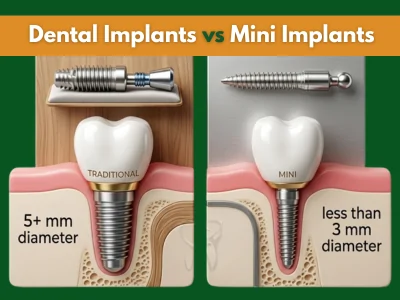
When it comes to replacing missing teeth, dental implants have revolutionized restorative dentistry. However, many patients aren’t aware that there are different types of implants available, including mini implants. Understanding the differences between traditional dental implants and mini implants can help you make an informed decision about which option is best suited to your needs and circumstances.
What Are Dental Implants?
Traditional dental implants are small titanium posts surgically inserted into the jawbone to act as artificial tooth roots. Over time, they fuse with the bone in a process called osseointegration, providing a stable foundation for crowns, bridges, or dentures. Dental implants are highly durable and are considered a long-term solution for tooth replacement.
Key Features of Traditional Dental Implants:
- Material: Usually titanium or zirconia.
- Size: Typically 3.4 to 5 mm in diameter and 10 to 16 mm in length.
- Longevity: With proper care, traditional implants can last 25 years or more.
- Procedure: Requires sufficient jawbone density; may involve bone grafting.
- Cost: Higher upfront investment compared to other dental solutions.
Benefits of Traditional Dental Implants
- Durability: Traditional implants are strong and can handle normal biting and chewing forces.
- Aesthetic Appeal: They look and function like natural teeth.
- Bone Preservation: Implants stimulate the jawbone, preventing bone loss over time.
- Versatility: Suitable for replacing a single tooth, multiple teeth, or supporting full dentures.
What Are Mini Dental Implants?
Mini dental implants are a smaller, less invasive version of traditional implants. They are typically less than 3 mm in diameter and are designed for patients who may not qualify for regular implants due to jawbone limitations or for those seeking a quicker, more cost-effective solution.
Key Features of Mini Dental Implants:
- Material: Usually titanium.
- Size: Less than 3 mm in diameter.
- Longevity: Average lifespan ranges from 5 to 15 years.
- Procedure: Less invasive; often does not require bone grafting.
- Cost: Generally lower than traditional implants.
Benefits of Mini Dental Implants
- Less Invasive: Smaller size means simpler insertion and reduced surgical trauma.
- Faster Recovery: Healing time is generally shorter, sometimes just a few weeks.
- Affordability: Lower cost makes them accessible to more patients.
- Support for Dentures: Mini implants are excellent for stabilizing lower dentures, reducing slipping and discomfort.
Dental Implants vs Mini Implants: Side-by-Side Comparison
| Feature | Traditional Dental Implants | Mini Dental Implants |
|---|---|---|
| Diameter | 3.4–5 mm | < 3 mm |
| Longevity | 25+ years | 5–15 years |
| Procedure | Invasive, may require bone grafting | Minimally invasive, often no grafting |
| Recovery Time | Several months for osseointegration | Weeks |
| Cost | Higher | Lower |
| Ideal Use | Single tooth, multiple teeth, full arch | Stabilizing dentures, narrow jaw spaces |
| Durability | High, handles heavy bite forces | Moderate, may not suit high-stress areas |
| Bone Preservation | Excellent | Moderate |
Who Should Consider Traditional Implants?
Traditional dental implants are ideal for patients who:
- Want a permanent, long-term solution.
- Have sufficient jawbone density or are willing to undergo bone grafting.
- Need replacement for multiple teeth or full-arch restoration.
- Are comfortable with a longer treatment timeline and higher cost.
Who Should Consider Mini Implants?
Mini dental implants are suitable for patients who:
- Have a thin or compromised jawbone and want a less invasive option.
- Need to stabilize dentures, especially lower dentures.
- Prefer a quicker procedure and recovery.
- Have budget constraints but want a functional tooth replacement.
Consult With a Dental Expert
Choosing between traditional and mini implants isn’t about one being better. It’s about which is better for your situation. At Maple Dental, our experienced team specializing in family dentistry in Hesperia will evaluate your bone structure, oral health, and specific needs to recommend the right option. Sometimes patients benefit from combining both types of implants for optimal results.
Dr. Mayur Mehta and our team are committed to guiding you through the process and ensuring long-term success. Both implant types require the same level of care as natural teeth, and our friendly team will support you every step of the way.
Restore Your Smile with Confidence
Don’t let missing teeth hold you back. Whether you’re curious about traditional dental implants or mini implants, our Hesperia dentist team is ready to help you decide the best option. Call 760-949-7274 or schedule your appointment now and take the first step toward a healthier, more confident smile.

