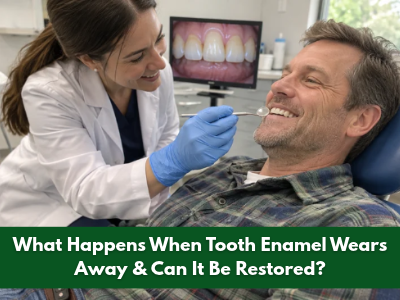
What Happens When Tooth Enamel Wears Away, and Can It Be Restored?
You are cruising down Main Street on your morning commute, coffee in the cup holder, and you take that first sip of iced latte. Suddenly a sharp zing shoots through your tooth. You wince, wait it out, and keep driving. Sound familiar?
That little jolt is often your teeth telling you something important: your enamel may be wearing thin. As a trusted dentist in Hesperia CA, we see this every week with commuters, truck drivers, and busy families all across the High Desert. The good news is that you have more options than you might think.
In this post, we will walk you through what enamel actually does, what happens when it wears away, and what we can do to protect and restore your smile.
What Exactly Is Tooth Enamel?
Enamel is the hard, shiny outer shell that covers each of your teeth. Think of it like the clear coat on your car. It takes the daily beating so the softer layers underneath stay protected.
Under the enamel sits dentin, a softer, yellowish layer filled with tiny tubes that lead straight to the nerve. When enamel is healthy, those tubes stay sealed. When enamel thins out, hot, cold, and sweet sensations travel right to the nerve.
Did You Know? Enamel is the hardest substance in the human body, even harder than bone. But because it contains no living cells, your body cannot grow it back once it is gone.
What Causes Enamel to Wear Away?
Enamel loss rarely happens overnight. It is usually the result of small daily habits adding up over months and years. Here are the most common culprits we see:
- Acidic drinks: Soda, energy drinks, sports drinks, and even flavored sparkling water soften enamel. If you sip on these during long drives, your teeth are bathing in acid for hours.
- Teeth grinding and clenching: Stress behind the wheel or at night can lead to bruxism and clenching, which grinds enamel down like sandpaper.
- Brushing too hard: A firm toothbrush and an aggressive scrubbing motion can wear enamel near the gumline.
- Acid reflux: Stomach acid that reaches the mouth is very harsh on teeth.
- Dry mouth: Saliva helps neutralize acid. Desert heat, car air conditioning, and certain medications can all leave your mouth dry.
- Frequent snacking: Every sugary or starchy snack feeds bacteria that produce acid.
Quick Tip: If you love your soda or energy drink on the road, drink it with a meal instead of sipping it all afternoon. Then rinse with water. Less contact time means less damage.
Signs Your Enamel Is Wearing Thin
Not sure if this is happening to you? Watch for these warning signs:
- Sensitivity to hot, cold, or sweet foods and drinks
- Teeth that look more yellow than they used to
- Edges of your front teeth that look slightly see through
- Small chips, cracks, or rough edges
- Shallow dents or cupped areas on the chewing surfaces
- Teeth that look shorter or flatter than before
If you checked off two or more of these, it is a good time to schedule a visit.
What Happens as Enamel Keeps Wearing Away?
Enamel erosion is not just a cosmetic issue. Left alone, it can open the door to bigger problems.
-
Sensitivity Gets Worse
At first, the zing might only happen with ice water. Over time, even breathing in cold air or eating something warm can trigger discomfort.
-
Cavities Become More Likely
Without a strong enamel barrier, bacteria reach the softer dentin more easily. Decay spreads faster in dentin, which often means you need dental fillings sooner than expected.
-
Teeth Can Crack or Chip
Thin enamel is brittle. Biting into something hard can lead to cracked teeth, and cracks can travel deeper with time.
-
Your Smile Changes Color
As enamel thins, more of the yellow dentin shows through. Many people try whitening at this stage, but whitening cannot bleach dentin the way it brightens enamel.
-
The Nerve Can Become Involved
In advanced cases, decay or cracks reach the pulp inside the tooth. That is when a root canal may be needed to save the tooth.
Important: Enamel loss is permanent, but further damage is preventable. The earlier we catch it, the simpler and more affordable your treatment will be.
Can Tooth Enamel Be Restored?
Here is the honest answer. Lost enamel does not grow back on its own. However, that does not mean you are stuck with sensitive, weak teeth. We can strengthen weakened enamel, replace what is missing, and protect what is left.
-
Remineralization for Early Wear
When enamel is softened but not yet gone, minerals like calcium, phosphate, and fluoride can help harden it again. During your oral exam and teeth cleaning, we can apply professional fluoride and recommend toothpaste that supports remineralization.
-
Dental Bonding
For small worn spots, chips, or exposed areas near the gumline, dental bonding is a quick and conservative fix. We apply a tooth colored resin, shape it, and harden it with a special light. It covers sensitive areas and restores a smooth surface, often in a single visit.
-
Dental Veneers
If your front teeth look worn, short, or discolored, veneers can make a dramatic difference. These thin, custom shells cover the front of each tooth, restoring shape, length, and color while adding a protective layer.
-
Dental Crowns
When a tooth has lost a lot of structure, a dental crown acts like a helmet. It covers the entire tooth above the gumline, restoring strength so you can chew comfortably again.
-
Sealants for Extra Protection
Dental sealants are a thin coating painted onto the chewing surfaces of back teeth. They are popular for kids, but adults with grooved or thinning molars can benefit too.
-
Night Guards for Grinders
If grinding is the cause, restoring your teeth is only half the job. A custom night guard takes the pressure off your enamel while you sleep. Curious about the difference between custom and drugstore options? Read our post on custom vs. store bought night guards.
Did You Know? Many patients assume whitening will fix a dull or yellow smile caused by thin enamel. In these cases, bonding or veneers usually deliver a brighter, longer lasting result. Learn more about teeth whitening and when it works best.
How We Protect Your Enamel at Maple Dental?
Every smile is different, so we never take a one size fits all approach. When you visit us, Dr. Mayur Mehta and our friendly team will:
- Examine your teeth closely using our intra oral camera so you can see exactly what we see
- Take digital X-rays to check for hidden decay beneath worn areas
- Talk with you about your habits, diet, and any grinding or reflux symptoms
- Build a treatment plan that fits your goals and your budget
We know that cost matters. That is why we accept many PPO plans and offer flexible financing options. If you are unsure what your plan covers, our guide to understanding your dental insurance coverage is a great place to start.
When you are looking for a dentist in Hesperia CA who will explain your options clearly and never rush you, we are here to help. You can meet the doctor or browse our full list of dental services.
Everyday Habits That Protect Your Enamel
You do not need a complete lifestyle overhaul to keep your enamel strong. Small changes go a long way:
- Keep a water bottle in your car and sip often, especially during summer
- Use a soft bristle toothbrush and gentle, circular strokes
- Wait about 30 minutes after acidic foods or drinks before brushing
- Use a straw for soda, juice, and iced coffee
- Chew sugarless gum after meals to boost saliva
- Choose fluoride toothpaste
- Visit us for checkups every six months
Quick Tip: Brushing right after drinking something acidic can actually scrub away softened enamel. Rinse with water first, then brush later.
Don’t Let Worn Enamel Put the Brakes on Your Smile
That zing you feel at the drive through window does not have to be your new normal. Whether you need a simple fluoride treatment, a quick bonding repair, or a complete smile refresh, we are ready to help you feel confident and comfortable again.
Call us today at 760-949-7274 or book your appointment online. Your enamel works hard for you every day. Let us return the favor.